

The Allure of Ragdoll Colouring: More Than Meets the Eye
For many, the image of a Ragdoll cat conjures up soft, plush fur and striking sapphire-blue eyes. But the beauty of Ragdoll colouring goes far deeper than just those iconic eyes. Understanding the nuances of their coat patterns and shades reveals a fascinating interplay of genetics and breed standards, making each Ragdoll a unique masterpiece. As of June 2026, the appeal of these gentle giants remains undimmed, largely due to their distinctive and varied colouring.
Last updated: June 5, 2026
The Ragdoll breed, famously developed in the 1960s by Ann Baker in California, is renowned for its docile nature and tendency to go limp when picked up, earning them the nickname “puppy-cats.” However, their visual appeal is equally significant. This guide will explore the intricate world of Ragdoll colouring, exploring the six recognised colour patterns, the accepted eye colours, and the genetic principles that bring these beautiful felines to life. We’ll look at what makes a Ragdoll truly a Ragdoll, beyond their placid temperament.
Key Takeaways
- Ragdoll cats exhibit six primary colour patterns: Seal, Blue, Chocolate, Lilac, Red, and Cream, often combined with white in specific markings.
- The most common patterns are Colourpoint, Mitted, and Bicolor, each with distinct white markings on the face, paws, and body.
- All Ragdolls, by breed standard, must have blue eyes, with shades ranging from pale ice blue to deep sapphire.
- Colouring develops over time; kittens are born white and their true colours and patterns emerge over several years.
- Understanding Ragdoll colouring involves appreciating both the coat pattern and the underlying genetics that influence pigment.
The Six Accepted Ragdoll Colour Patterns
The Ragdoll breed standard, as recognised by major cat fancier associations, includes six foundational colours. These colours form the basis for all Ragdoll coats, often appearing in conjunction with white. It’s important to distinguish between the colour itself and the pattern in which it appears. The colour refers to the pigment, while the pattern describes the distribution of that pigment, particularly in relation to white markings.
These six colours are: Seal, Blue, Chocolate, Lilac, Red, and Cream. While the first four are the most commonly seen and traditionally recognised, Red and Cream have gained acceptance more recently as breeders have worked to expand the colour palette within the breed’s genetic framework. Each colour, when expressed in different patterns, creates a unique visual appeal.
Seal Point
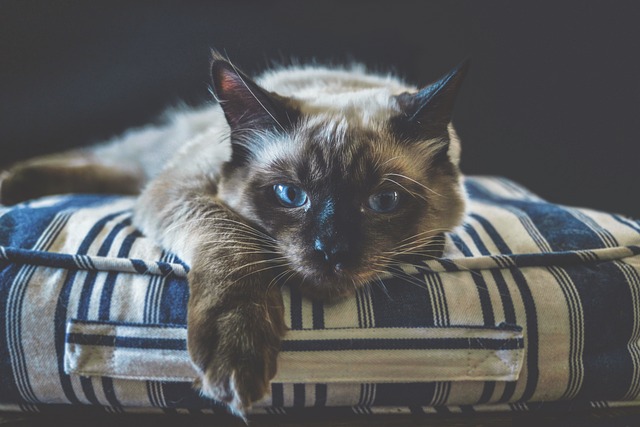
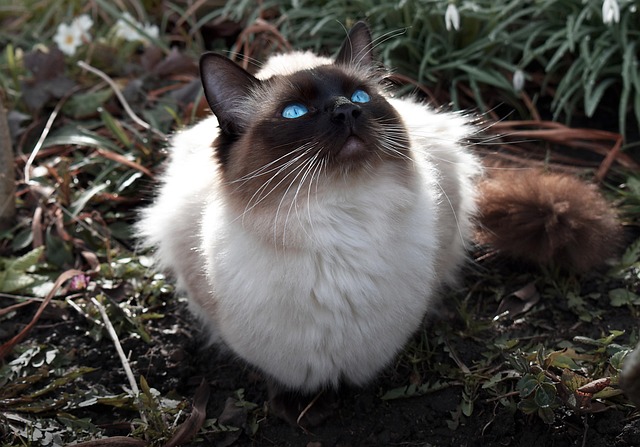
The Seal Point is perhaps the most classic and recognised Ragdoll colouring. It features a rich, dark brown or blackish-brown pigment, resembling the colour of seals. This deep, warm colour is typically seen on the ears, face (mask), legs, paws, and tail, contrasting with a lighter body colour, often a creamy beige or fawn. The intensity of the seal colour can vary, but it’s always a deep, solid shade.
In practice, a Seal Point Ragdoll kitten is born almost entirely white. As it matures, the darker pigment begins to appear in the cooler extremities – the ears, face, legs, and tail. This is a characteristic of the temperature-sensitive gene that Ragdolls, along with other pointed breeds like Siamese and Himalayan, possess. This genetic trait means darker pigment develops where the body is coolest.
Blue Point
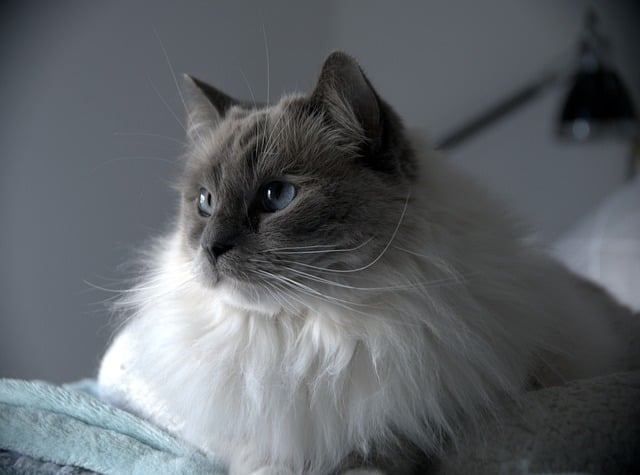
The Blue Point Ragdoll presents a cooler, softer version of the Seal Point. Instead of a deep brown, the pigment is a cool grey or slate blue. This striking colour appears on the ears, face mask, legs, paws, and tail. The body colour is typically a lighter, off-white or pale grey, creating a harmonious and elegant contrast. The “blue” refers to the colour of the pigment, not a literal blue fur colour.
The development of a Blue Point Ragdoll is similar to the Seal Point. Kittens are born white, and the blue-grey pigment gradually darkens these cooler areas over time. This gradual change is part of the charm of raising a Ragdoll, as their true colours unfurl over their first few years. The shade of blue can vary from a light, silvery grey to a deeper slate.
Chocolate Point
The Chocolate Point Ragdoll displays a warm, rich chocolate-brown pigment. This colour is softer and warmer than the Seal Point, leaning towards a milk chocolate hue. The chocolate pigment appears on the ears, face mask, legs, paws, and tail, contrasting with a creamy or ivory body colour. This colour is a result of a recessive gene, meaning a kitten must inherit the chocolate gene from both parents to display this colouring.
Because the chocolate gene is recessive, responsible breeders carefully manage their breeding programs to produce these sought-after colours. A Chocolate Point Ragdoll offers a distinct warmth in its colouring, making it a favourite among those who appreciate richer, earthy tones. Like other points, the pigment develops over time in the cooler extremities.
Lilac Point
The Lilac Point, also known as a Frost Point or Lavender Point, is the diluted version of the Chocolate Point. It presents a soft, dusky grey-pink or pale lilac hue on the ears, face mask, legs, paws, and tail. The body colour is typically a shimmering, off-white or pale silvery grey. This colour is visually delicate and often described as ethereal.
This colour is also genetically recessive, arising from the dilution gene acting upon the chocolate pigment. Lilac Points are considered less common than Seal or Blue Points, adding to their desirability. Their unique pastel shade makes them stand out, and like all points, their colour develops gradually from kittenhood into adulthood.
Red Point
The Red Point, also known as Flame Point, showcases a warm, vibrant reddish-orange or fiery orange pigment on the ears, face mask, legs, paws, and tail. The body is usually a lighter cream or off-white. This colour is a result of the gene that controls red pigment (phaeomelanin), which is dominant. Red Points can sometimes appear more muted as kittens, with their full fiery colour developing as they mature.
Red Points often have a lively and energetic appearance, even within the typically calm Ragdoll temperament. This colour can be a striking contrast to the more common darker points, offering a splash of warmth and brightness. The gene responsible for red pigment is sex-linked, meaning it’s carried on the X chromosome, which influences its inheritance pattern between males and females.
Cream Point
The Cream Point is essentially a diluted version of the Red Point. It features a soft, pale cream or buff colour on the ears, face mask, legs, paws, and tail, with a lighter, almost white body. This colour is achieved through the dilution gene acting on the red pigment, resulting in a gentle, pastel hue. Cream Points offer a subtle and sophisticated aesthetic.
Cream Points can be harder to distinguish from other light-coloured Ragdolls, especially in kittenhood. Their colour is delicate and can sometimes be mistaken for a very pale Seal or Blue Point if white markings are extensive. However, when viewed in good light, the subtle cream undertones are evident, providing a soft and pleasing visual. This is the lightest of the red/cream colour spectrum.
Ragdoll Colour Patterns: Introducing White
While the six colours define the pigment, the pattern dictates how that pigment is distributed, especially in relation to white. The three primary patterns for Ragdolls are Colourpoint, Mitted, and Bicolor. Each pattern offers a unique look, and the amount and placement of white are key distinguishing features.
Colourpoint
In the Colourpoint pattern, the cat has the colour (Seal, Blue, Chocolate, Lilac, Red, or Cream) on its ears, face mask, legs, paws, and tail, with a solid, unpatterned body colour that’s lighter than the points. There’s minimal to no white. A small white locket on the chest is permissible, but extensive white is not characteristic of this pattern. This is the most basic expression of the colouration gene.
A true Colourpoint Ragdoll will have no white on its paws or face, except for the potential small chest spot. The contrast between the darker points and the lighter body is sharp and distinct. This pattern is often considered the foundational pattern from which others evolved. It’s a pure expression of the Siamese-like temperature-sensitive gene at play.
Mitted
White paws characteriss the Mitted pattern, often described as “mittens.” The hind legs typically have white extending up to the hocks, while the front paws have white only on the paws themselves. A defining feature of the Mitted pattern is a white stripe, or “blaze,” running from the nose up between the eyes, sometimes extending to the forehead. The rest of the body colour appears on the ears, face (mask, excluding the blaze), and tail.
The Mitted pattern offers a delightful contrast with the white “mittens.” The white blaze on the face adds a distinct facial marking that sets it apart from the pure Colourpoint. This pattern is highly sought after for its charming appearance. The precise extent of white on the front paws and the facial blaze can vary, adding individual uniqueness within the Mitted category.
Bicolor
The Bicolor pattern features significant amounts of white. The cat has a white chest, belly, and often a white blaze on the face, which can vary in shape and size. The coloured pigment appears on the ears and face mask, and typically on the tail. Crucially, the coloured areas on the body are broken up by substantial white. The hind legs may be entirely white or have coloured patches.
A key characteristic of the Bicolor pattern is that the coloured pigment doesn’t appear on the paws or legs in a solid block like in the Mitted pattern. Instead, white is predominant on the front of the body. The tail is usually coloured, but the back and sides of the body can have patches of colour interspersed with white. The amount and placement of white can vary significantly, leading to different visual interpretations of the Bicolor pattern.
The Iconic Blue Eyes of the Ragdoll
All Ragdoll cats, regardless of their coat colour or pattern, are required by breed standard to have blue eyes. This is a non-negotiable trait for the breed. The shade of blue can vary, from a pale, icy blue to a deep, vivid sapphire, and this variation adds to the individual charm of each cat.
The blue eye colour in Ragdolls is a genetic trait linked to the same gene responsible for their colourpointation. This is why cats with colourpoint patterns, like Siamese and Ragdolls, almost universally have blue eyes. The gene that restricts pigment to the extremities also influences the eye colour, resulting in the characteristic blue hue. While other pointed breeds might have different eye colours, for the Ragdoll, blue is the standard.
Understanding Ragdoll Colour Genetics
A few key genes governs the fascinating array of Ragdoll colouring. The primary gene responsible for the “point” effect is the C locus gene, which carries the alleles for full colour (C) and colourpoint (cs). Ragdolls are typically homozygous for the colourpoint allele (cscs), meaning they have the gene for colourpoint from both parents, restricting pigment to the cooler extremities.
The ‘b’ allele at the B locus determines whether the point colour is black (B, for Seal and Chocolate) or blue/lilac (b, for Blue and Lilac). So, a Seal Point has the genotype BB cscs, while a Blue Point has bb cscs. Similarly, Chocolate Points are BB cscs (with the chocolate gene) and Lilac Points are bb cscs (with the lilac gene). These combinations create the four classic point colours.
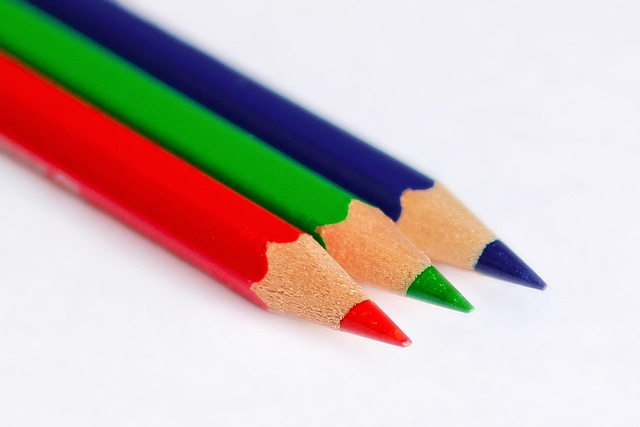
The O locus gene controls the Red and Cream colours, which determines whether red pigment (phaeomelanin) is produced. This gene is sex-linked, residing on the X chromosome. Cats with at least one O allele will produce red pigment, leading to Red Points. If the O allele is absent, and dilution is also absent (dd), the cat will be a Seal or Blue Point. If dilution is present (dd), the cat will be a Chocolate or Lilac Point.
The dilution gene (d) acts on the base colours. A cat that would be Seal (BB) becomes Blue if it has the dilute gene (dd). Similarly, a Chocolate (BB) becomes Lilac (dd). So, a Seal Point with the dilute gene becomes a Blue Point. The combination of these genes – C for colourpoint, B/b for black/blue pigment, O for red pigment, and D/d for dilution – creates the spectrum of Ragdoll colours.
Colour Development: From Kitten to Adult
One of the most captivating aspects of Ragdoll cats is how their colouring evolves. Ragdoll kittens are born completely white, with no visible colour on their bodies or faces. This is because their body temperature is uniformly warm in the womb, preventing pigment development in most areas. As the kitten grows and its body temperature fluctuates, the colourpoint gene begins to express itself.
The cooler extremities – the ears, nose, paws, and tail – are where the pigment first appears, typically starting a few days to a week after birth. The colour gradually deepens and spreads over the following weeks and months. A Seal Point kitten, for instance, might start with faint greyish markings on its ears that slowly darken to a rich brown. The body colour also lightens as the cat matures, creating the characteristic contrast.
This developmental process continues for several years. The full depth of colour and the extent of white markings, especially in Mitted and Bicolor patterns, may not be fully realised until the cat is two to three years old. This gradual transformation means that a kitten’s initial colouring might not be its final colouring. Responsible breeders often provide updates on a kitten’s developing coat as it grows.
Clarifying Colour vs. Pattern: A Practical Distinction
It’s easy to get confused between the colour and the pattern of a Ragdoll’s coat. Think of the colour as the specific shade (Seal, Blue, Chocolate, Lilac, Red, Cream) and the pattern as the design or layout of that colour on the cat’s body, including the presence and distribution of white. For instance, a “Seal Point Colourpoint” is a cat with Seal colour in the Colourpoint pattern. A “Blue Mitted” is a cat with Blue colour in the Mitted pattern.
The standard colour patterns are Colourpoint (minimal white), Mitted (white paws and facial blaze), and Bicolor (significant white on face and body). These patterns can be combined with any of the six accepted colours. For example, you can have a Seal Colourpoint, a Seal Mitted, or a Seal Bicolor. Each combination offers a distinct aesthetic while adhering to the breed’s core characteristics.
Common Misconceptions About Ragdoll Colouring
One of the most common misconceptions is that all Ragdolls have bright blue eyes. While this is the breed standard, the intensity of the blue can vary significantly, from a very pale ice blue to a deep, dark sapphire. Some kittens may even have lighter blue eyes that deepen with age.
Another misconception is that kittens are born with their adult colouring. As we’ve discussed, Ragdoll kittens are born white and their colours develop over months and years. The colour you see on a young kitten is not its final colouration. This gradual change means that predicting a kitten’s adult coat can be challenging, even for experienced breeders.
Some people believe that certain colours or patterns are inherently less healthy or have temperament issues. However, according to veterinary and breeder consensus as of June 2026, all accepted Ragdoll colours and patterns are genetically sound and don’t indicate health problems or altered temperament. Genetics primarily influencs health and temperament, nutrition, and environment, not by coat colour alone.
Caring for Your Ragdoll’s Coat
Ragdolls have a semi-longhaired coat that requires regular grooming to prevent matting and keep it looking its best. While their coat is less prone to matting than some other longhaired breeds, daily or at least weekly brushing is essential. Using a good quality comb and brush designed for longhaired cats can help remove loose fur and prevent tangles.
The grooming process not only keeps the coat healthy but also provides an opportunity to bond with your cat. Pay attention to areas prone to matting, such as behind the ears, under the legs, and the hindquarters. Regular brushing also helps distribute natural oils, keeping the coat shiny and healthy, thereby enhancing the beauty of their unique colouring. A balanced diet rich in omega-3 and omega-6 fatty acids also contributes significantly to coat health and vibrancy.
Ragdoll Colouring and Their Temperament
It’s a common myth that coat colour influences a cat’s personality. While anecdotal evidence might suggest otherwise, scientific consensus and extensive breed observations, including those from major cat associations in 2026, indicate that temperament is not dictated by coat colour or pattern in Ragdolls. All variations, from the darkest Seal Point Bicolor to the lightest Lilac Colourpoint, should exhibit the breed’s signature gentle, placid, and affectionate nature.
Ragdolls are known for being social, good-natured, and adaptable. They often get along well with children and other pets, making them ideal family companions. Their calm demeanour is a breed trait, not tied to their colouring. When choosing a Ragdoll, focus on the individual cat’s personality and the breeder’s reputation for producing healthy, well-socialised kittens, rather than making assumptions based on coat colour.
Frequently Asked Questions About Ragdoll Colouring
How much do Ragdolls cost?
As of June 2026, the price of a Ragdoll kitten can vary significantly based on breeder reputation, lineage, location, and the kitten’s specific colouring and pattern. Generally, prices can range from approximately $1,200 to $3,500 USD. Less common colours like Chocolate, Lilac, Red, and Cream, or specific patterns like Mitted or Bicolor, might command higher prices.
Are all Ragdolls blue-eyed?
Yes, by breed standard, all Ragdoll cats must have blue eyes. The intensity of the blue can range from pale ice blue to deep sapphire, but it must be blue. This characteristic is genetically linked to their colourpointality and is a defining trait of the breed.
When do Ragdoll kittens get their colour?
Ragdoll kittens are born white. Their distinctive coat colours and patterns begin to appear within the first week or two of life, primarily on their ears and face. However, their full colouring and the extent of white markings can take up to two to three years to fully develop and mature.
What is the rarest Ragdoll colour/pattern?
While all colours and patterns are accepted, the Red and Cream colours, along with the Lilac colour, are generally considered less common than the Seal and Blue points. Among the patterns, the Colourpoint (with minimal white) is perhaps the most fundamental, while Mitted and Bicolor offer more distinct white markings that are very popular.
Can Ragdolls have different eye colours?
According to the official breed standards of major cat associations, Ragdolls must have blue eyes. While genetically, other eye colours could theoretically appear due to mutations or crossbreeding, a Ragdoll with non-blue eyes would not be considered a purebred Ragdoll according to the established breed registry requirements.
What is a Lynx Ragdoll?
A Lynx Ragdoll is a Ragdoll cat that exhibits tabby markings within its colour points. For example, a Seal Lynx Point Ragdoll would have faint tabby stripes on its face mask, ears, legs, and tail, in addition to the seal colour. This pattern is a variation of the accepted point colours and is often highly desirable.
Do Ragdolls shed a lot?
Ragdolls have a medium-long coat that does shed, though generally less than some other longhaired breeds. Their coat is less dense and doesn’t have a thick undercoat, which can make grooming more manageable. Regular brushing, ideally a few times a week, is recommended to manage shedding and prevent mats.
Embracing the Beauty of Ragdoll Colouring
The world of Ragdoll colouring is rich and diverse, offering a stunning array of patterns and shades, all framed by those beloved blue eyes. From the classic Seal Point to the enchanting Lilac Mitted and the vibrant Red Bicolor, each Ragdoll is a testament to the beautiful outcomes of feline genetics. Understanding these variations not only enhances our appreciation for the breed but also helps in making informed choices when selecting a companion.
As you admire these magnificent cats, remember that their colouring is a living canvas that evolves over time. Whether you’re drawn to the traditional or the more unique shades, the defining characteristic of any Ragdoll remains their gentle spirit and loving nature, beautifully showcased by their distinctive coats. The ongoing acceptance of new colours and patterns by breed associations reflects a dynamic appreciation for the Ragdoll’s visual appeal.
Last reviewed: June 2026. Information current as of publication; pricing and product details may change.
Editorial Note: This article was researched and written by the Pet Magazine editorial team. We fact-check our content and update it regularly. For questions or corrections, contact us. Knowing how to address ragdoll colouring early makes the rest of your plan easier to keep on track.



About The Author