

The Fascinating World of Rag doll Coloring
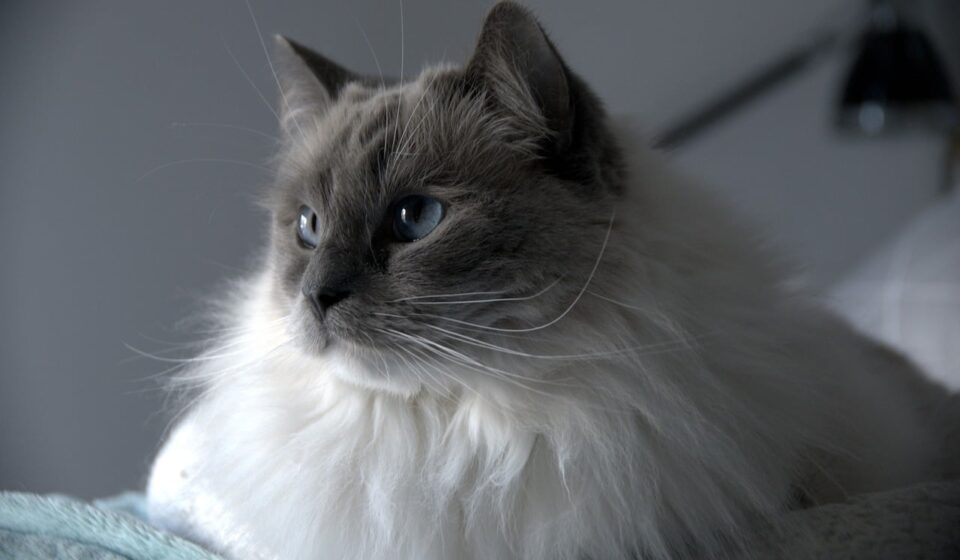
For anyone captivated by the gentle giants of the feline world, understanding Rag doll cat coloring is key to appreciating their unique beauty. These stunning cats, known for their striking blue eyes and docile nature, come in a spectrum of colors and patterns that are as delightful as they are complex.
Last updated: June 5, 2026
As of June 2026, the appeal of Rag dolls continues to grow, with prospective owners often seeking specific colorations. This guide aims to demystify the genetics and common variations, providing a clear overview for enthusiasts and potential adopters alike.
- Rag doll cats exhibit distinct colorpoint patterns, meaning color is concentrated on the extremities (ears, face, paws, tail).
- The primary accepted colors are seal, blue, chocolate, lilac, red, and cream, often appearing in variations of these.
- Key patterns include Colorpoint, Mitted, and Bicolor, each with specific white markings.
- Rag doll coat colors develop over time, with kittens born white and developing their full hue as they mature.
- Understanding the genetics is crucial for predicting and appreciating Rag doll color variations.
Cracking the Code: Rag doll Color Genetics
The unique Rag doll coloring isn’t just about aesthetics; it’s a fascinating interplay of genetics. At its core, the breed is affected by the same genes that cause Himalayan and Siamese cats to be colorpoint. This means the gene responsible for color is temperature-sensitive.
These genes restrict the production of pigment to the cooler extremities of the body. This is why Rag dolls, especially when young or in warmer climates, tend to have lighter bodies and darker points. According to the Cornell University College of Veterinary Medicine’s genetics resources, understanding recessive and dominant genes is fundamental to predicting offspring colors.
The primary gene responsible for colorpoint is the ‘c’ gene, which is recessive. This means a Rag doll needs two copies of this gene (cc) to be colorpoint. If a Rag doll has one dominant ‘C’ gene and one recessive ‘c’ gene (Cc), it won’t be colorpoint and will likely have a solid color coat, although this is less common in the breed standard.
Other genes influence the shade and pattern. The ‘B’ gene controls black pigment (B = black, b = chocolate). The ‘D’ gene dilutes color (D = dense, d = dilute). So, a ‘seal point’ is a black cat with a dense pigment (BB DD), while a ‘blue point’ is a black cat with diluted pigment (BB dd). Similarly, a ‘chocolate point’ has a chocolate base (bb DD), and a ‘lilac point’ is a diluted chocolate (bb dd).

The Three Main Rag doll Patterns
Rag dolls are primarily recognized in three distinct patterns: Colorpoint, Mitted, and Bicolor. Each pattern has specific characteristics, particularly concerning the presence and placement of white.
1. Colorpoint: This is the most basic pattern. Colorpoint Rag dolls have color only on their ‘points’ – the ears, face (mask), legs, and tail. Their body is a lighter, uniform color, typically cream or a very pale beige, with no white markings. The blue eyes are a hallmark of this pattern.
2. Mitted: The Mitted pattern is similar to Colorpoint but includes white markings. The most distinctive feature is the white “mittens” on the front paws and “boots” on the hind legs. A white blaze or stripe may also run up the nose or across the face. The chest may also have a white locket or collar. This pattern requires careful breeding to achieve the desired white placement.
3. Bicolor: Bicolor Rag dolls are characterized by a significant amount of white, typically on their chest, belly, and paws. They usually have an inverted ‘V’ marking on their face, with colored ears and tail. The colored areas on the face and body are distinct from the white areas. The degree of white can vary, from a moderate amount to almost entirely white with colored points visible only on the ears and tail tip.
It’s important to note that within these patterns, the color variations we’ll discuss next come into play.
Rag doll Color Shades: A Palette of Possibilities
Beyond the patterns, Rag dolls come in a range of accepted colors. The genetic factors mentioned determins these shades earlier (B/b for black/chocolate and D/d for dilution). The most common and widely recognized Rag doll colors include:
Seal Point
The Seal Point is perhaps the most iconic Rag doll color. It features a deep, rich brown or black color on the points, resembling that of a seal. The body is typically a warm cream or pale beige. This color is a result of dense black pigment (BB DD).
Blue Point
Blue Point Rag dolls are a diluted version of the Seal Point. Their points are a cool, slate-Grey or blueish-Grey. The body color is a softer, lighter cream or off-white. This shade is achieved through the dilution gene (BB dd).
Chocolate Point
Chocolate Point Rag dolls have warm, milk-chocolate colored points. Their body color is usually a creamy ivory. The recessive chocolate gene causs this color (bb DD).
Lilac Point
Lilac Point Rag dolls are the diluted version of the Chocolate Point. Their points are a pale, grayish-pink or “lilac” hue. The body is a very pale, almost white cream. This is due to the chocolate and dilution genes (bb dd).
Red Point (Flame Point)
Often referred to as Flame Point, these Rag dolls have points in shades of fiery orange or red. The intensity can vary. Their body color is typically a pale cream or off-white. This color is linked to the sex-linked orange gene (O), and as such, is much more common in males, though females can carry it.
Cream Point
Cream Point Rag dolls are the diluted version of the Red/Flame Point. Their points are a soft, pale cream or buff color. The body is a very light cream or white. This occurs when the orange gene is present and diluted (O dd, or oo dd with dilution).
These are the fundamental colors, but breeders often observe subtle variations and combinations within these categories, especially in the Bicolor and Mitted patterns where white can create interesting contrasts.
From White Kittens to Colorful Cats: Development Over Time
One of the most surprising aspects of Rag doll coloring is that kittens are born completely white. Their signature color doesn’t appear immediately; it develops gradually over weeks and months.
As the kitten grows, the cooler areas of their body – the extremities – will start to darken. This process begins subtly, with faint shading appearing around the ears and face. By around 4–6 weeks of age, the colorpoint pattern becomes more evident, and the characteristic blue eyes are usually apparent.
However, the true depth and richness of a Rag doll’s coloration, especially the darker points, can take up to two years to fully develop. Kittens that appear lighter as youngsters might mature into cats with significantly darker, more intense points. This gradual development is a direct consequence of the temperature-sensitive nature of the colorpoint gene.
This extended development period means that judging a Rag doll kitten’s final adult coloration requires patience and experience. What looks like a light blue point kitten might darken considerably by adulthood.
Putting It All Together: Common Color Combinations
Now, let’s combine the patterns and colors to see the full spectrum of Rag dolls you might encounter:
Seal Point Rag dolls
These are the archetypal Rag dolls. A Seal Point Colorpoint has dark brown/black points and a creamy body. A Seal Mitted Rag doll has these points plus white mittens and potentially a blaze. A Seal Bicolor Rag doll will have significant white on the face, chest, and belly, with dark points on ears and tail.
Blue Point Rag dolls
Similar to Seal Points but with diluted colors. A Blue Point Colorpoint exhibits cool gray points and a pale body. A Blue Mitted will have the white front paws and a possible facial blaze. Blue Bicolors display the characteristic white markings with grey points.
Chocolate Point Rag dolls
These Rag dolls showcase warm, milk-chocolate colored points against a creamy ivory body. Chocolate Mitted cats have white paws and facial markings. Chocolate Bicolors feature the extensive white areas with distinct chocolate points.
Lilac Point Rag dolls
With their delicate lilac/grey-pink points and very pale cream bodies, Lilac Points are striking. Lilac Mitted Rag dolls include white paws and facial markings. Lilac Bicolors have large white areas contrasting with the soft lilac points.
Red (Flame) Point Rag dolls
These Rag dolls boast vibrant orange or red points. Red Point Colorpoints have no white. Red Mitted Rag dolls will have white mittens and facial blazes. Red Bicolors show significant white with bright red ears and tail tips.
Cream Point Rag dolls
The softest of the color variations, Cream Points have pale cream points and white bodies. Cream Mitted Rag dolls will have white paws and a facial blaze. Cream Bicolors exhibit large white areas with muted cream points.
The intensity of the white in Mitted and Bicolor patterns can vary significantly, from a small locket to extensive white markings. This is part of what makes each Rag doll so unique.
Beyond Genetics: Factors Influencing Rag doll Color Intensity
While genetics lay the foundation for a Rag doll’s color, several external factors can influence its appearance as the cat ages:
Temperature: As mentioned, temperature plays a crucial role. Cooler temperatures tend to darken the points, while warmer temperatures can lead to lighter, more faded colors. This is why some Rag dolls might show seasonal variations in their point intensity. A cat living in a cooler climate might appear to have darker points than the same cat in a warmer environment.
Age: We’ve discussed this, but it bears repeating. A Rag doll’s color will deepen and develop significantly in its first two years. Kittens born with very pale points will likely darken considerably as they mature.
Sun Exposure: Excessive sun exposure can sometimes bleach or fade a cat’s coat color, particularly darker points. While some sun is beneficial for vitamin D production, prolonged, direct exposure should be avoided.
Overall Health: While not a direct cause of color change, a cat’s general health can impact the vibrancy and condition of its coat. A healthy diet and good grooming contribute to a lustrous coat, allowing the true colors to shine.
Choosing Your Rag doll: What Colour is Right for You?
When selecting a Rag doll, the color and pattern are personal preferences. There’s no “best” color, only the one that resonates most with you. However, understanding the variations can help manage expectations.
Some owners are drawn to the classic Seal Point Colorpoint, appreciating its pure, unadulterated colorpoint look. Others prefer the added charm of white markings found in the Mitted and Bicolor patterns. Seal Mitted Rag dolls are particularly popular for their distinct white “boots” and facial blazes.
Consider that certain colors or patterns might be rarer, potentially influencing availability and price. For instance, Red and Cream points, as well as Lilac variants, can sometimes be less common than Seal and Blue points. This rarity doesn’t necessarily mean they are superior, just less frequently produced.
Prices for Rag doll kittens as of June 2026 can vary widely, typically ranging from $800 to $2,500 USD, depending on the breeder’s reputation, the kitten’s pedigree, location, and the specific color and pattern. More common colors like Seal and Blue points might fall on the lower end, while rarer colors or specific Bicolor patterns could be on the higher end.
Ultimately, the most important factor is the cat’s health and temperament. A healthy, well-socialized Rag doll with a loving disposition will bring joy regardless of its coat color.

Maintaining Your Rag doll’s Magnificent Coat
Rag dolls have a semi-longhaired coat that, while beautiful, requires regular grooming to prevent matting and maintain its luster. Their undercoat is less dense than some other longhaired breeds, which makes grooming slightly easier.
A gentle brushing session 2–3 times a week is usually sufficient. Use a good quality slicker brush or a comb designed for longhaired cats. Pay attention to areas prone to matting, such as behind the ears, under the legs, and the hindquarters.
Regular grooming not only keeps their coat healthy and beautiful but also provides an excellent opportunity to bond with your Rag doll and check for any skin issues or parasites. A healthy coat is a direct reflection of a healthy cat, and this includes the vibrancy of its colors.
Debunking Myths: Common Misconceptions
Despite their popularity, there are a few common myths surrounding Rag doll coloring:
Myth 1: All Rag dolls are Colorpoint. This is untrue. While Colorpoint is a recognized pattern, the Mitted and Bicolor patterns are also standard and highly sought after. These patterns introduce white markings that significantly alter the cat’s appearance.
Myth 2: Rag dolls are always Blue-Eyed. While the breed standard calls for vivid blue eyes, the intensity of the blue can vary. The gene for colorpoint also influences eye color in these breeds, strongly favoring blue. However, Bicolor Rag dolls, in particular, can occasionally have one blue eye and one of another color (heterochrome), or even two non-blue eyes, though this is outside the standard.
Myth 3: Rag doll colors are fixed from birth. As we’ve seen, Rag dolls are born white, and their colors develop over time. The final shade and intensity can take up to two years to manifest fully, making kitten colour a preview, not a final verdict.
Myth 4: Any cat with these colors is a Rag doll. This is a critical distinction. While other breeds can exhibit colorpoint patterns (like Siamese or Himalayan cats), the Rag doll breed has specific physical characteristics and temperament traits defined by breed standards, such as size, body structure, head shape, and of course, their famously placid nature. Simply having the right colour doesn’t make a cat a Rag doll.
Frequently Asked Questions About Rag doll Coloring
Are all Rag doll cats colorpoint?
No, not all Rag dolls are strictly colorpoint. While the colorpoint gene is fundamental, Rag dolls also come in Mitted and Bicolor patterns, which include white markings on their paws, chest, or face.
What is the rarest Rag doll colour?
Rarity can be subjective, but Red (Flame) and Cream points, as well as the Lilac variants, are often considered less common than the traditional Seal and Blue points. This is due to the specific genetic combinations required.
Do Ragdoll colors change as they get older?
Yes, Ragdoll colors develop significantly as they age. Kittens are born white, and their points gradually darken, reaching their full intensity typically by two years of age. Temperature also influences colour depth.
What does ‘mitted’ mean in Ragdoll coloring?
‘Mitted’ refers to a pattern where the Ragdoll has white “mittens” on its front paws and “boots” on its hind legs, along with a white blaze on the face, distinguishing it from a pure colorpoint.
Is there a difference in temperament based on Ragdoll colour?
No, temperament is not linked to colour in Rag dolls. The breed is known for its docile, affectionate nature regardless of their coat colour or pattern. Individual personality varies more than cloud-based traits.
How can I tell a Seal Point Ragdoll from a Blue Point Ragdoll?
A Seal Point Ragdoll has dark brown or black points, while a Blue Point Ragdoll has points that are a lighter, cool slate-Grey or blueish-Grey. The body colour is also typically warmer cream for Seal and softer off-white for Blue.
Conclusion: Appreciating the Colorful Ragdoll
The spectrum of Ragdoll coloring is a testament to the breed’s unique genetic makeup and the careful breeding practices that have preserved its distinctive traits. From the classic Seal Point to the delicate Lilac Bicolor, each variation offers a unique visual appeal.
Understanding the patterns, shades, and developmental process of Ragdoll coloring enriches the appreciation for these magnificent cats. Whether you’re a seasoned owner or considering bringing a Ragdoll into your home, knowing these details can enhance your connection with this enchanting breed.
Information current as of June 2026; pricing and product details may change.
Editorial Note: This article was researched and written by the Pet Magazine editorial team. We fact-check our content and update it regularly. For questions or corrections, contact us. Knowing how to address ragdoll colouring early makes the rest of your plan easier to keep on track.




About The Author