
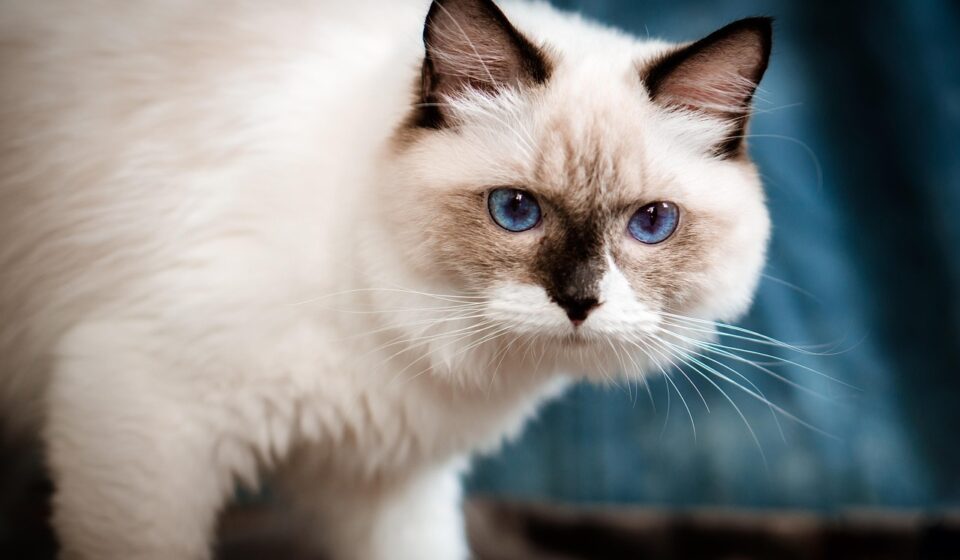

Understanding Rag doll Coat Genetics
For anyone working through the question of what makes a Rag doll cat so visually striking, the answer lies in a fascinating interplay of genetics. Unlike many breeds, Rag dolls are a type of pointed cat, meaning their body color is lighter than their extremities – the ears, face, legs, and tail. This isn’t just about aesthetics; it’s a direct result of a specific gene that affects pigment production at cooler body temperatures.
Last updated: June 5, 2026
This temperature-sensitive albinism gene means that where the cat’s body is warmer, the fur is lighter, and where it’s cooler (the extremities), the fur is darker. This is why Rag doll kittens are born entirely white and develop their color and pattern as they mature. As of June 2026, our understanding of these genetic markers continues to deepen, allowing breeders to predict and achieve specific color outcomes more reliably.

Practically speaking, this genetic quirk is what gives Rag dolls their characteristic ‘pointed’ look, and it’s the foundation upon which all their beautiful variations are built. It’s a simple yet elegant mechanism that results in incredibly diverse and appealing feline companions.
The Six Core Rag doll Colors
While patterns add complexity, the fundamental color palette for Rag dolls is rooted in six core shades. These are the foundational colors that, when combined with different patterns and genetic modifiers, create the vast spectrum of Rag doll appearances we see today. Understanding these core colors is essential for appreciating the breed’s diversity.
The six recognized colors are:
- Seal: The most classic and common color, resembling a dark chocolate or very dark brown.
- Blue: A diluted version of seal, appearing as a slate gray or a soft, muted blue.
- Chocolate: A rich, warm brown, distinct from the darker seal.
- Lilac: The diluted version of chocolate, presenting as a pale gray with pinkish undertones.
- Red (or Flame): A vibrant ginger or orange hue, less common in purebred Rag dolls but present.
- Cream: The diluted version of red, a soft, pale orange or buff color.
From a different angle, these colors are often seen in conjunction with other genetic traits, such as links (tabby) or tortie (tortoiseshell) patterns, which further diversify the visual appeal of Rag doll cats.
Exploring Rag doll Cat Patterns
Beyond the base color, Rag dolls come in distinct patterns that dictate the distribution of color and white. These patterns are as crucial to their breed standard and appearance as the colors themselves. The most recognized patterns are Colorpoint, Mitted, Bi-Color, and the less common Van pattern.
Colorpoint: This is the foundational pattern where the cat has color only on its points (ears, face mask, legs, and tail), with the body being much lighter, often cream or white, shade. This is the simplest expression of the pointed gene.
Mitted: Similar to Colorpoint, but with the addition of white ‘mittens’ on the front paws and ‘boots’ on the back legs. Often, there’s also a white chin or a white blaze extending up the nose. This pattern adds a charming detail to the classic pointed look.
Bi-Color: This pattern is characterized by a larger distribution of white, typically covering the face (often in an inverted ‘V’ shape), the chest, belly, and legs. The colored areas are usually confined to the ears and the top of the head, with colored patches that can appear on the back. This pattern gives a very striking, clean appearance.
Van Pattern: This is the rarest pattern, with color appearing only on the ears and tail, and a small amount on the face. The rest of the body is predominantly white. It’s a dramatic look that’s less common in show standards but highly sought after by some enthusiasts.
What this means in practice is that even within a single color like ‘seal’, you can have a Seal Colorpoint, a Seal Mitted, or a Seal Bi-Color, each looking distinctly different.
Lynx Point and Tortie Point Modifiers
Adding another layer of fascinating variation to Rag doll colors are the Lynx Point and Tortie Point modifiers. These aren’t separate patterns but rather genetic expressions that alter the appearance of the core colors and patterns.
Lynx Point (Tabby): When the tabby gene (also known as the ‘agouti’ gene) is present, the solid colors on the points will show a tabby pattern. This means you’ll see distinct ‘M’ markings on the forehead, ‘pencil lines’ on the cheeks, and subtle rings on the legs and tail. A Seal Lynx Point, for example, will have dark gray tabby markings instead of solid seal color on its points.
Tortie Point (Tortoiseshell): The tortie gene is linked to the X chromosome, which is why it’s almost exclusively seen in females. It results in a mottled or patched appearance of two colors. In Rag dolls, this means you’ll see a mix of colors, such as red and seal, or cream and blue, appearing in patches on the points. A Tortie Rag doll would typically show patches of red and seal, or cream and blue, on their ears, face, legs, and tail.
Combining these modifiers with the base patterns creates an astonishing array of looks. For instance, you can have a Seal Mitted Lynx Point, or a Blue Tortie Bi-Color. These complex combinations are part of what makes each Rag doll unique.

How Rag doll Colors Change Over Time
One of the most endearing traits of Rag doll cats is how their colors and patterns develop and change as they age. Kittens are born pure white due to the temperature-sensitive gene, and their defining colors and patterns emerge gradually over the first few months and even years of their lives.
Initially, very faint shading might appear around 1–2 weeks of age. By the time they are around 8–10 weeks old, the distinct points will be more visible. However, the full richness and depth of their color, especially for seal, chocolate, and blue shades, often don’t fully mature until the cat is 2 to 3 years old. According to the Cat Fanciers’ Association (CFA) 2025 breed standard updates, while maturity is generally reached around this age, subtle darkening or deepening of color can continue even further.
What this means for new owners is that a kitten’s color at 8 weeks might not be its final color at 2 years. A kitten that appears very pale blue might mature into a rich blue, or a kitten with faint chocolate markings might develop a deeper, more distinct chocolate hue. This gradual development adds to the mystique and charm of raising a Rag doll.
Identifying Your Rag doll’s Color and Pattern
With so many variations, identifying your Rag doll’s specific color and pattern can sometimes feel like a puzzle. However, by carefully observing a few key features, you can usually determine its classification.
Start by noting the main color of the points: ears, face mask, legs, and tail. Is it dark brown (Seal), gray (Blue), warm brown (Chocolate), pale grey-pink (Lilac), orange (Red), or pale orange (Cream)? Then, look for the pattern: is it only on the points (Colorpoint)? Are there white ‘mittens’ on the paws (Mitted)? Is there a significant amount of white on the face and body, often with an inverted ‘V’ on the face (Bi-Color)? Is there white on the chest, chin, or belly (often part of Mitted or Bi-Color)?
Next, check for the Lynx (tabby stripes) or Tortie (mottled patches) modifiers. Do the colored points have faint stripes? Are there distinct patches of two different colors (e.g., red and seal)? Observing these features systematically will help you pinpoint your Rag doll’s unique combination. For instance, a Seal Mitted Lynx Point will have seal-colored stripes on its points, white mittens on its paws, and possibly a white blaze on its face.

Rarity and Popularity of Rag doll Colors
While all Rag doll colors are beautiful, some are naturally more common and popular than others. This is often influenced by historical breeding practices and consumer preference.
The Seal Point and Blue Point Rag dolls, particularly in the Bi-Color and Mitted patterns, are generally the most common and widely recognized. These were among the earliest colors established in the breed and are frequently seen in breed standard literature and shows. Their classic appeal has made them enduring favorites.
Conversely, colors like Red (Flame) and Cream, and their diluted versions like Chocolate and Lilac, can be less common. Red and Cream points are often a result of breeding that incorporates the ‘red’ gene, which can be recessive and less prevalent in initial breed development. Chocolate and Lilac points are also less common than Seal and Blue because they require specific genetic combinations to appear.
The Tortie Point and Lynx Point variations also add to the diversity, with Tortie being rarer due to its sex-linked inheritance (almost exclusively female). According to breed enthusiasts as of June 2026, while all colors are valued, the unique appeal of rarer shades like Lilac or Chocolate often commands a slightly higher interest, though prices typically remain within a similar range for well-bred kittens regardless of color.
Rag doll Color and Price Considerations
When considering the price of a Rag doll kitten, color and pattern play a role, but they are usually secondary to factors like lineage, breeder reputation, and health clearances. While some might assume rarer colors command significantly higher prices, this isn’t always the case, especially from reputable breeders.
Reputable breeders focus on health, temperament, and adherence to breed standards. While they will note a kitten’s color and pattern, the price is often more influenced by whether the kitten is being sold as a pet or for breeding purposes. Pet-quality kittens, regardless of whether they are Seal Bi-Color or Lilac Mitted, might be priced similarly. Breeding-quality kittens, which meet stricter standards for show potential, will naturally be more expensive.
However, some enthusiasts do seek out specific, less common colors like Chocolate, Lilac, Red, or Cream, and their Lynx or Tortie variations. While a responsible breeder won’t dramatically inflate prices based solely on rarity, there can be a slight premium if demand for these specific traits is high. As of June 2026, a well-bred Rag doll kitten from a reputable breeder typically ranges from $1,500 to $3,000 USD. Extremely rare or exceptionally well-documented pedigrees might occasionally exceed this, but price is rarely dictated by color alone; it’s more about the overall quality and health of the kitten.
It’s crucial to avoid breeders who overcharge significantly for specific colors without offering comparable health guarantees and temperament assessments. The health and well-being of the kitten should always be the primary concern, not just its coat color.
Common Mistakes When Choosing Rag doll Colors
One of the most common mistakes potential Rag doll owners make is prioritizing a specific color or pattern over the kitten’s health, temperament, and the breeder’s reputation. While a beautiful coat is certainly appealing, it shouldn’t be the sole deciding factor.
Another mistake is assuming rarity equals superiority. A less common color like a Lilac Tortie Bi-Color is not inherently ‘better’ than a common Seal Bi-Color. Both, if bred responsibly, will possess the wonderful Rag doll traits of gentleness and affection. Focusing too much on rarity can lead owners to less reputable sources who may exploit this desire with inflated prices and poor breeding practices.
And, some buyers don’t fully understand how Rag doll colors change. They might choose a kitten based on its appearance at 8 weeks, only to be surprised by how much its coat develops and deepens over the next year. It’s important to appreciate the kitten’s potential rather than its current, immature coloration.
Finally, neglecting to ask about genetic health testing for common Rag doll issues, such as hypertrophic cardiomyopathy (HCM) or polycystic kidney disease (PKD), is a critical error. A stunning color is meaningless if the cat is not healthy. Always ensure the breeder provides health clearances for the parents.

Tips for Choosing Your Rag doll’s Color
When selecting your Rag doll, embrace the journey of color development. Understand that the kitten you choose today will evolve. Look for a kitten whose current coloring hints at the mature coat you find appealing, but be prepared for changes.
If you have a strong preference for a specific color or pattern, do your research and find a reputable breeder who specializes in producing those traits while maintaining excellent health and temperament standards. Don’t be afraid to ask to see the parents or other cats from previous litters to get a sense of the color progression.
Consider the ‘feel’ you want. Seal and Blue points are classic and striking. Chocolate and Lilac offer a softer, more unique elegance. Red and Cream points bring warmth and vibrancy. Lynx points add a touch of wildness, while Tortie points offer a beautiful mosaic of color. Each combination has its own charm.
Ultimately, the best color is the one that speaks to you personally, but always balance this with the assurance of a healthy, well-socialized companion. According to experienced breeders, the bond you form with your Rag doll is far more important than the exact shade of their fur.
Frequently Asked Questions About Rag doll Colors
Are all Rag dolls pointed?
Yes, by breed standard, all Rag doll cats are considered pointed. This means their body color is lighter than the color on their ears, face, legs, and tail due to a temperature-sensitive gene. They are born white and develop their points as they mature.
Do Rag doll colors change completely?
Rag doll colors don’t change completely, but they do deepen and mature over time. Kittens are born white, and their point colors and patterns become more defined and richer as they grow into adulthood, typically reaching full maturity by 2–3 years of age.
What is the rarest Rag doll color?
While rarity can fluctuate with breeding trends, colors like Red (Flame), Cream, Chocolate, and Lilac are generally less common than Seal and Blue. The Van pattern is also very rare. Complex combinations involving Tortie or Lynx modifiers on these rarer base colors can also be considered quite uncommon.
Can a Rag doll be solid black?
No, a purebred Rag doll cat can’t be solid black. The breed standard requires them to be pointed, meaning they must have a lighter body color and darker extremities. Any cat presented as a solid black Rag doll is likely a mix-breed or misidentified.
Which Ragdoll color is most popular?
Seal Point and Blue Point Rag dolls, especially in the Mitted and Bi-Color patterns, are typically the most popular and commonly seen. Their classic look is widely recognized and appreciated by cat lovers worldwide.
Do different Ragdoll colors have different personalities?
No, a Ragdoll’s personality is not determined by its color. Their famous gentle, affectionate, and docile temperament is a breed trait, not linked to coat color or pattern. Individual personality variations exist within any litter, regardless of color.
How do I choose a Ragdoll color?
Choose a Ragdoll color based on your personal preference, but always prioritize the kitten’s health, temperament, and the breeder’s reputation. Appreciate that colors develop over time, and focus on finding a well-socialized companion rather than solely on a specific hue.
Information current as of June 2026; pricing and product details may change.
Source: Britannica
Editorial Note: This article was researched and written by the Pet Magazine editorial team. We fact-check our content and update it regularly. For questions or corrections, contact us. Knowing how to address ragdoll colors early makes the rest of your plan easier to keep on track.
About The Author