

Frill necked: The Iconic Frill-Necked Lizard: An In-Depth Look for 2026
The frill-necked lizard (Chlamydosaurus kingii), instantly recognizable by its spectacular neck frill, is a fascinating reptile native to northern Australia and southern New Guinea. While an iconic symbol of Australian fauna, its unique characteristics also make it a subject of interest for exotic pet enthusiasts. As of May 2026, understanding the intricate needs of these creatures, whether in the wild or in captivity, requires a complete approach that goes beyond basic identification. This guide delves into the world of the frill-necked lizard, exploring its biology, behavior, habitat requirements, and the considerations for keeping one as a pet, offering insights that reflect the latest understanding in reptile husbandry.
Last updated: May 19, 2026
Key Takeaways
- The frill-necked lizard’s signature neck frill serves multiple purposes, including defense, thermoregulation, and communication.
- These arboreal lizards are native to Australia and New Guinea, preferring warm, humid environments with ample climbing structures.
- In captivity, their diet should mimic their natural insectivorous and carnivorous habits, supplemented appropriately.
- Successful pet ownership hinges on providing a spacious, secure enclosure with specific temperature and humidity gradients.
- While generally docile, they can exhibit defensive behaviors like gaping their frill and hissing when threatened.
The Remarkable Neck Frill: More Than Just a Display
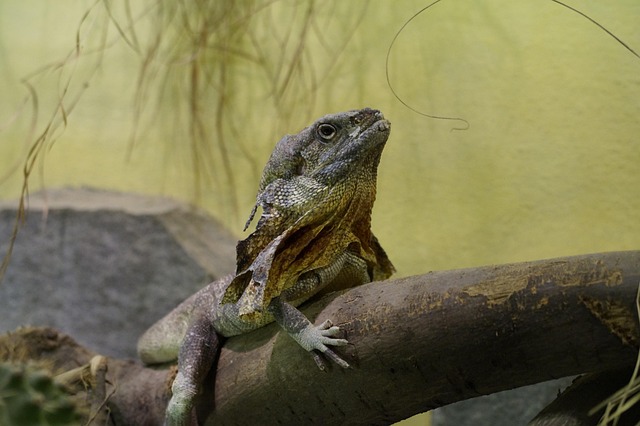
The most striking feature of the frill-necked lizard is undoubtedly its large, colorful neck frill. This cartilaginous structure, which can extend up to 30 cm (12 inches) in diameter when fully opened, is usually folded and lies flat against the neck. It’s primarily used as a defensive mechanism. When a frillneck feels threatened, it can rapidly expand this frill, accompanied by gaping its mouth and emitting a hiss.
This sudden display is often enough to startle potential predators, allowing the lizard to escape. Beyond defense, the frill plays a role in thermoregulation. By expanding and contracting it, the lizard can better absorb or dissipate heat, helping it maintain an optimal body temperature in its environment.
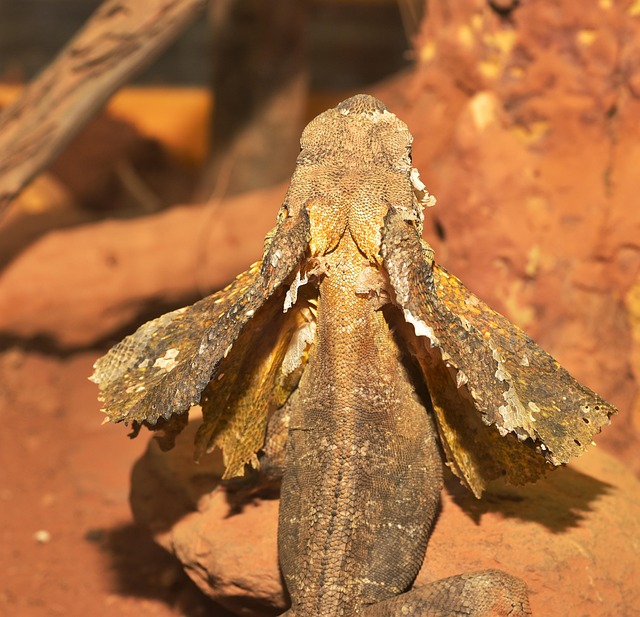
From a different angle, the frill’s coloration can also be a factor in social signaling, though this aspect is less understood than its defensive capabilities. The sheer size and visual impact of the frill are impressive, contributing to the species’ unique allure.
Classification and Geographic Origins
The frill-necked lizard belongs to the family Agamidae, a diverse group of lizards commonly known as draconyms or dragon lizards. It’s the sole member of the genus Chlamydosaurus, highlighting its distinct evolutionary path. Scientifically named Chlamydosaurus kingii, it was first described by zoologist John Edward Gray in 1825. The species is primarily found in the tropical savannas and woodlands of northern Australia, spanning across Queensland and the Northern Territory, and extending into the southern regions of New Guinea. This wide distribution across varied landscapes underscores its adaptability to specific climatic conditions.
The distribution of the frill-necked lizard is closely tied to its preferred habitat. They are most commonly found in areas with eucalyptus and acacia trees, where they can perch and escape predators. Their range in Australia covers a significant portion of the northern tropical zone, while in New Guinea, they inhabit similar forested areas.
Appearance and Physical Attributes
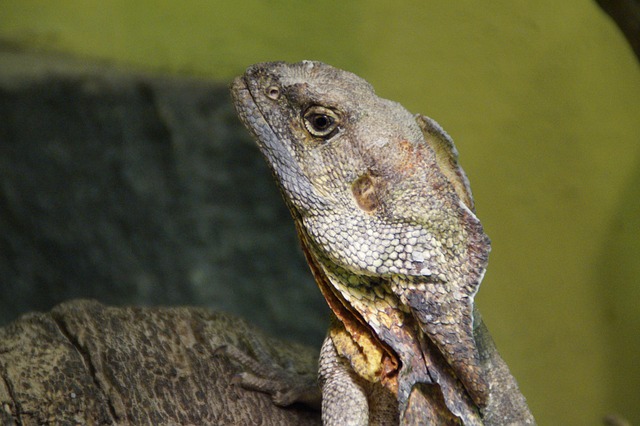
Adult frill-necked lizards typically measure between 75 to 90 cm (30 to 35 inches) in total length, with females generally being smaller than males. A significant portion of this length is attributed to their long tail. Their bodies are slender and adapted for arboreal life, with strong limbs and sharp claws for climbing. The skin texture varies, often appearing rough or scaled, and color patterns can range from sandy brown and gray to more vibrant earthy tones, often with darker mottles or stripes that aid in camouflage against tree bark and foliage.
The head is distinct, with a pronounced snout and large eyes that provide excellent vision, crucial for spotting prey and predators. The powerful jaws are equipped with sharp teeth designed for gripping insects and small vertebrates. The presence of specialized scales around the neck forms the characteristic frill, which is supported by elongated cartilage. This frill remains folded most of the time but can be dramatically displayed when the lizard is agitated or seeking to attract a mate.
Where Frill-Necked Lizards Thrive
Frill-necked lizards are primarily arboreal, meaning they spend most of their lives in trees. Their preferred habitat consists of woodlands, savannas, and monsoon forests with ample trees and shrubs, typically in regions that experience distinct wet and dry seasons. They require environments with sufficient climbing surfaces, such as branches, vines, and tree trunks, where they can bask, hunt, and escape danger. The substrate on the ground is usually sandy or loamy soil. In their natural environment, they often seek out trees with hollows or dense foliage for shelter and protection.
The ideal habitat for frill-necked lizards must provide opportunities for thermoregulation. They are ectothermic, relying on external heat sources to regulate their body temperature. This means access to sunny basking spots is essential, as is the availability of cooler, shaded areas to retreat to when temperatures become too high. Humidity levels are also a critical factor, with tropical and subtropical regions offering the necessary moisture.
Understanding Frillneck Behavior
The behavior of the frill-necked lizard is a fascinating study in adaptation and survival. As mentioned, they are primarily arboreal and diurnal, meaning they are most active during the day. Their diet consists mainly of insects, such as ants, termites, and beetles, but they are also opportunistic feeders and will consume small vertebrates like spiders, lizards, and even small rodents or birds if the opportunity arises. Hunting typically involves perching and ambushing prey or actively foraging along branches.
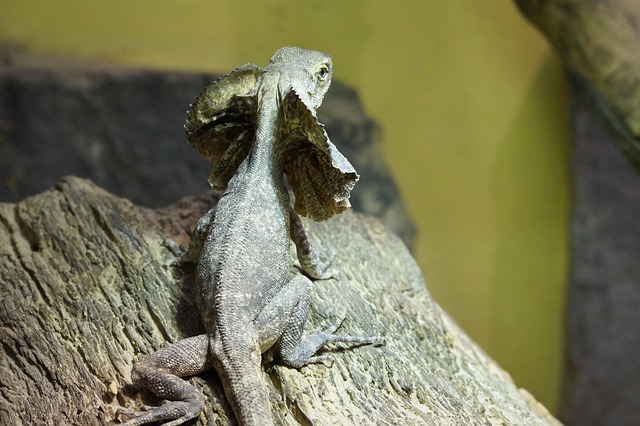
One of the most remarkable behaviors observed in frill-necked lizards is their bipedalism. When fleeing from a predator, they can rise onto their hind legs, extend their frill, and run at surprising speeds, sometimes covering considerable distances before diving into cover. This unique locomotion is a testament to their evolutionary adaptations. Socially, they are generally solitary creatures, interacting primarily during the mating season or when defending their territory. While they exhibit defensive displays, captive specimens can become quite accustomed to human presence, especially if handled from a young age, though their instinct to display remains.
Feeding Your Frill-Necked Lizard
In the wild, the frill-necked lizard is an insectivore and opportunistic carnivore. Their diet is varied, comprising a significant number of ants and termites, as well as other insects like cockroaches, grasshoppers, and beetles. They will also consume spiders, smaller lizards, and occasionally small vertebrates. Their hunting strategy often involves patiently waiting on a branch and quickly striking at passing prey.
For pet owners, replicating this diet is crucial for maintaining the lizard’s health. A captive frill-necked lizard’s diet should consist of a variety of insects. Staple foods include crickets, roaches (such as Dubia roaches), and mealworms. It’s important to gut-load these insects by feeding them nutritious foods for 24-48 hours before offering them to the lizard.
This ensures the insects pass on their nutritional value. Additionally, dusting the insects with a calcium supplement (with Vitamin D3, especially if UV lighting is not optimal) several times a week, and a multivitamin supplement once or twice a week, is essential for preventing metabolic bone disease. As adults, they may occasionally accept small pieces of lean meat or small, whole vertebrate prey like pinky mice, but insects should form the bulk of their diet. Providing fresh water daily is also paramount, though they often prefer to drink water droplets from leaves or misting.
Creating an Ideal Enclosure
Establishing the correct environment is paramount for the health and well-being of a captive frill-necked lizard. Due to their arboreal nature, enclosures should be tall rather than wide, providing ample vertical space for climbing. A minimum enclosure size for an adult lizard is typically around 90 cm (3 feet) in length, 60 cm (2 feet) in width, and 120 cm (4 feet) in height. The enclosure must be well-ventilated to prevent stagnation and the buildup of harmful bacteria.
Decorations should include plenty of branches, cork bark, and sturdy plants (real or artificial) to create climbing opportunities and hiding places. A secure basking area is essential, achieved through a heat lamp that creates a temperature gradient within the enclosure. Daytime temperatures should range from 29-32°C (85-90°F) at the basking spot, with cooler areas around 24-26°C (75-79°F). Nighttime temperatures can drop to 20-22°C (68-72°F).
Crucially, frill-necked lizards require a high level of humidity, ideally between 60-80%. This can be maintained through regular misting (twice daily is often recommended) and providing a large water dish. Full-spectrum UV-B lighting is also critical to aid in calcium metabolism and prevent metabolic bone disease. A UV-B bulb designed for reptiles, emitting the appropriate spectrum, should be used and replaced according to manufacturer recommendations, typically every 6-12 months, as their output degrades over time.
Reproduction in Frill-Necked Lizards
The breeding season for frill-necked lizards typically coincides with the onset of the wet season in their native Australia, usually around September to December. Males will display to females, often involving head-bobbing and extending their frills. After successful mating, the female will lay a clutch of 2 to 14 leathery eggs in a nest dug in soft, sandy soil, often near rotting logs or termite mounds, which help maintain consistent temperature and humidity. Incubation periods can vary depending on ambient temperature, but typically last between 50 to 80 days.
In captivity, successful breeding requires careful management of environmental conditions, mimicking the natural seasonal changes. Providing optimal diet, temperature, and humidity is key to encouraging reproductive behavior. After laying, the eggs can be carefully removed and incubated in a controlled environment using a substrate like vermiculite or sand/peat moss mix, maintaining a stable temperature (around 28-30°C or 82-86°F) and humidity. Hatchlings are miniature versions of the adults and require smaller enclosures and appropriately sized food items, such as small crickets and fruit flies, dusted with calcium and vitamins.
Interacting With Your Frill-Necked Lizard
When it comes to temperament, frill-necked lizards are often described as being shy and easily startled. Their natural instinct when encountering a perceived threat is to flee or display their frill. While they can become accustomed to regular, gentle handling, they are not typically considered a “cuddly” pet and may never fully enjoy being handled extensively. It’s important to approach them calmly and deliberately, avoiding sudden movements or loud noises that could trigger their defensive display.
Proper handling involves supporting their entire body, including their legs and tail, to prevent injury and make them feel secure. If a lizard displays its frill and hisses, it’s a clear signal that it feels threatened, and it’s best to back off and give it space. Attempting to force interaction can lead to stress and potentially injuries for both the lizard and the handler. Introducing them to handling gradually from a young age can help them become more tolerant, but their wild nature should always be respected. According to the Australian Reptile Park, successful long-term captive care relies heavily on understanding these behavioral cues and providing an environment that minimizes stress.
Maintaining Health: Common Issues and Solutions
Like any exotic pet, frill-necked lizards are susceptible to certain health issues, primarily related to improper husbandry. Metabolic Bone Disease (MBD) is a significant concern, often caused by insufficient calcium intake, an improper calcium-to-phosphorus ratio in the diet, or inadequate UV-B lighting. Symptoms include lethargy, soft jaw bones, deformed limbs, and paralysis. Prevention is key: ensure a balanced diet with proper supplementation and provide appropriate UV-B lighting.
Other potential issues include respiratory infections, often due to incorrect temperature or humidity levels (too cold or too humid without adequate ventilation). Symptoms can include wheezing, nasal discharge, and gaping for air. Parasites, both internal and external, can also affect frill-necks. Regular fecal checks by a reptile veterinarian can help diagnose and treat internal parasites.
Maintaining impeccable hygiene in the enclosure, using appropriate substrates, and ensuring live insect feeders are properly sourced and gut-loaded are crucial preventative measures. If you suspect your frill-necked lizard is ill, consulting a veterinarian experienced with reptiles is essential for accurate diagnosis and treatment. According to the Australian Veterinary Association, reptile health management requires specialized knowledge and consistent monitoring.
Responsible Ownership: Legality and Ethics
Before acquiring a frill-necked lizard, it’s imperative to understand the legalities surrounding their ownership in your specific region. In many places, including parts of their native Australia, keeping native wildlife as pets is heavily regulated or prohibited without special permits. For instance, in Queensland, Australia, where they are native, keeping a frill-necked lizard requires a permit. In other countries, they may be legal to own but subject to specific import regulations. As of May 2026, potential owners must thoroughly research and comply with all local, state, and federal laws regarding exotic pet ownership.
Ethically, owning a frill-necked lizard means committing to providing a high standard of care that meets their complex needs for space, temperature, humidity, diet, and social environment. It’s important to source animals from reputable breeders who raise them in captivity, rather than from the wild, to avoid negatively impacting wild populations and to ensure the animal is accustomed to captive conditions. The Australian Wildlife Conservancy notes that responsible pet ownership can help reduce pressure on wild populations by providing an alternative to wild capture.
Frill-Necks in Popular Culture
The frill-necked lizard gained significant international recognition in the late 1980s and 1990s, largely due to its prominent role in the Disney film “The Rescuers Down Under” (1990), where a frill-neck named “Mr. Frank” was a memorable character. More recently, their distinctive appearance has led to their frequent depiction in nature documentaries and educational programs showcasing Australian wildlife. Their unique defensive display has also made them a subject of fascination in scientific research and popular science articles, exploring the mechanics and evolutionary advantages of their frill and bipedal locomotion.
The image of the frill-necked lizard is strongly associated with the Australian outback and its unique biodiversity. Organizations like Zoos Victoria often feature them in educational programs to highlight the importance of conserving native Australian species and their habitats. The lizard’s reptilian charm and remarkable adaptations continue to capture the public’s imagination, solidifying its status as an iconic Australian animal.
Frequently Asked Questions
Can a frill-necked lizard be kept as a pet?
Yes, frill-necked lizards can be kept as pets, but they require specialized care. Potential owners must ensure they can provide a large, humid enclosure with appropriate temperature gradients, a varied diet of insects, and proper UV-B lighting. Legal ownership must also be confirmed in your local area.
What is the purpose of a frill-necked lizard’s frill?
The primary purposes of the frill-necked lizard’s frill are defense and thermoregulation. When threatened, the frill expands dramatically to startle predators, and it can also help absorb or dissipate heat to regulate body temperature.
How long do frill-necked lizards live?
In captivity, with proper care, frill-necked lizards can live for 15 to 20 years, and sometimes even longer. Their lifespan in the wild is generally shorter due to predation and environmental challenges.
Are frill-necked lizards aggressive?
Frill-necked lizards are naturally shy and easily startled. While they possess a defensive display, they are not inherently aggressive towards humans. With consistent, gentle handling from a young age, they can become more tolerant, but they are not typically a pet that enjoys extensive physical interaction.
What do frill-necked lizards eat in the wild?
In the wild, frill-necked lizards are primarily insectivores, feeding on ants, termites, beetles, and grasshoppers. They are also opportunistic carnivores and will consume spiders and smaller vertebrates when available.
What are the most common mistakes when caring for a frill-necked lizard?
Common mistakes include providing an enclosure that’s too small, failing to maintain adequate humidity and temperature gradients, insufficient UV-B lighting leading to MBD, and an improper or unbalanced diet. Respecting their defensive behaviors is also key.
Embracing the Frill-Necked Lizard in 2026
The frill-necked lizard remains a captivating species, embodying the unique biodiversity of Australia and New Guinea. Whether observed in its natural habitat or cared for in a specialized captive environment, understanding its complex needs is paramount. As of May 2026, advancements in reptile husbandry continue to refine our approach to keeping these animals healthy and thriving, emphasizing species-appropriate enclosures, diets, and environmental controls. Responsible ownership involves acknowledging their wild nature, respecting their defensive mechanisms, and committing to the significant care requirements they present. For those willing to invest the time and resources, the frill-necked lizard offers a rewarding glimpse into the fascinating world of reptiles.
Information current as of May 2026; pricing and product details may change.
Editorial Note: This article was researched and written by the Pet Magazine editorial team. We fact-check our content and update it regularly. For questions or corrections, contact us. Knowing how to address frill necked early makes the rest of your plan easier to keep on track.
Related read: Axolotl Care Guide: Dispelling Myths for Healthier Pets in 2026.
Related read: Bearded Dragon for Sale: Your 2026 Guide to Choosing and Caring for a New Pet.
Related read: How to Care for a Pet Rabbit in 2026: Essential Guide.
About The Author